
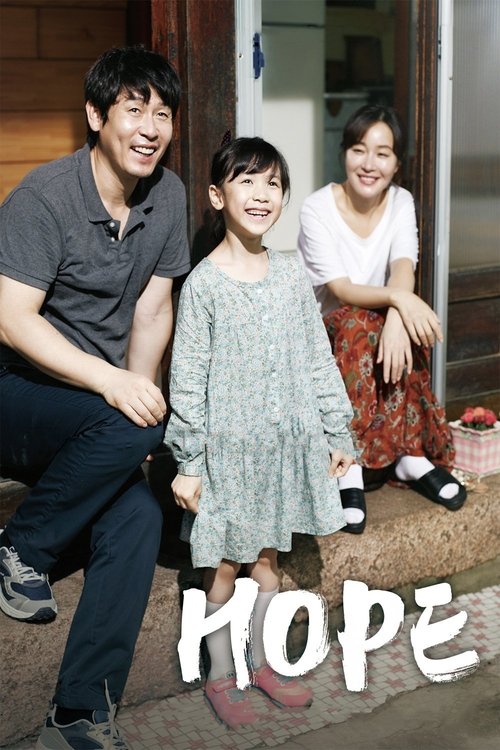

Hope
2013 • Directed by Lee Joon-ik • 2h 2m
About this film
After 8-year-old So-won narrowly survives a brutal sexual assault, her family labors to help her heal while coping with their own rage and grief.
Content Warning
Viewer Discretion Advised: Hope (소원) is based on a real-life criminal case involving the brutal physical and sexual assault of a minor. This review and the film itself deal with themes of extreme trauma, medical distress, and the failings of the legal system. While the film focuses on the journey of recovery rather than the act of violence, the subject matter may be deeply distressing for some readers.
⚠ This review contains spoilers
Proceed only if you've seen the film or don't mind spoilers.
"The Costume of a Father: Why Hope is the Ultimate Study in Resilience"
Reviewed April 18, 2026
The Unthinkable Rendered Human Cinema often struggles to handle the subject of child victimization without veering into exploitation or unearned sentimentality. Lee Joon-ik’s Hope (소원) avoids both traps by making a radical choice: it refuses to give the perpetrator the spotlight. Instead, it dedicates its runtime to the agonizing, incremental, and ultimately inspiring process of a family trying to stitch their lives back together after the unthinkable. A Masterclass in Restraint The film’s greatest strength is its perspective. We see the world through the eyes of eight-year-old So-won (Lee Re). Following the assault, the film transitions from a bright, mundane morning into a cold, clinical reality of hospital corridors and legal red tape.
Lee Joon-ik displays immense directorial restraint. He spares the audience the graphic details of the crime, focusing instead on the psychological shrapnel. The scene in which So-won, traumatized and fearful of all men—including her own father—retreats into herself is perhaps one of the most painful sequences in modern South Korean cinema.
Performance and Pathos The heavy lifting is done by Sol Kyung-gu (as the father, Dong-hoon) and Lee Re.
Sol Kyung-gu delivers a heartbreakingly physical performance. His transformation from a somewhat distant, bumbling father into a man willing to sweat inside a heavy cartoon character suit in the sweltering heat—just so he can be near his daughter without triggering her fear—is the emotional spine of the film.
Lee Re, in her debut role, is nothing short of a miracle. She manages to convey a loss of innocence that feels terrifyingly real, yet she maintains a flicker of the resilient child underneath.
Breaking the Language Barrier It is important to note that Hope is a Korean Drama presented in the Korean language. While some viewers may be hesitant to engage with foreign-language films, the emotional performances here are so visceral that they transcend the need for native fluency. Whether you are using English subtitles or a translation in your preferred language, the visual storytelling and raw vocal delivery ensure that nothing is lost in translation. It is a testament to the film's power that the "subtitles barrier" disappears within the first fifteen minutes, leaving only the human story.
The Bittersweet Aftertaste For a film titled Hope, it carries a significant amount of rage. While the narrative provides a sense of emotional closure through the support of a neighborhood community, it is impossible to ignore the shadow of the real-world 2008 "Nayoung case" that inspired it. The film ends on a note of "normalcy," but it is a fragile one, underscored by the knowledge that the justice system failed to provide a sentence that matched the gravity of the crime.
Why this film earns a 9 out of 10:
- Narrative Discipline: By choosing to focus on the hospital rooms and the family home rather than a "revenge thriller" or police procedural, the film avoids the tropes of the genre. It forces the audience to stay present with the victim's journey.
- Symbolic Brilliance: The use of the "Cocong" cartoon suit serves as a profound visual metaphor for the literal and figurative "masks" parents wear to protect their children, even when they are breaking internally.
- Precision of Acting: Lee Re’s debut performance is the film's "X-factor." She avoids the "misery" trap by portraying a complex, slow-thawing trauma that feels grounded and terrifyingly real.
- A Near-Perfect Balance: It only misses a perfect 10 due to minor "K-Drama" stylistic flourishes, such as heavy musical cues, that slightly break the gritty realism established in the first act. However, it remains an unmissable masterpiece.
Cast








Rate this movie on TMDB
Log in with your TMDB account to rate Hope and sync it to your TMDB profile.
Logged in as
Your rating:
Syncs to your TMDB account